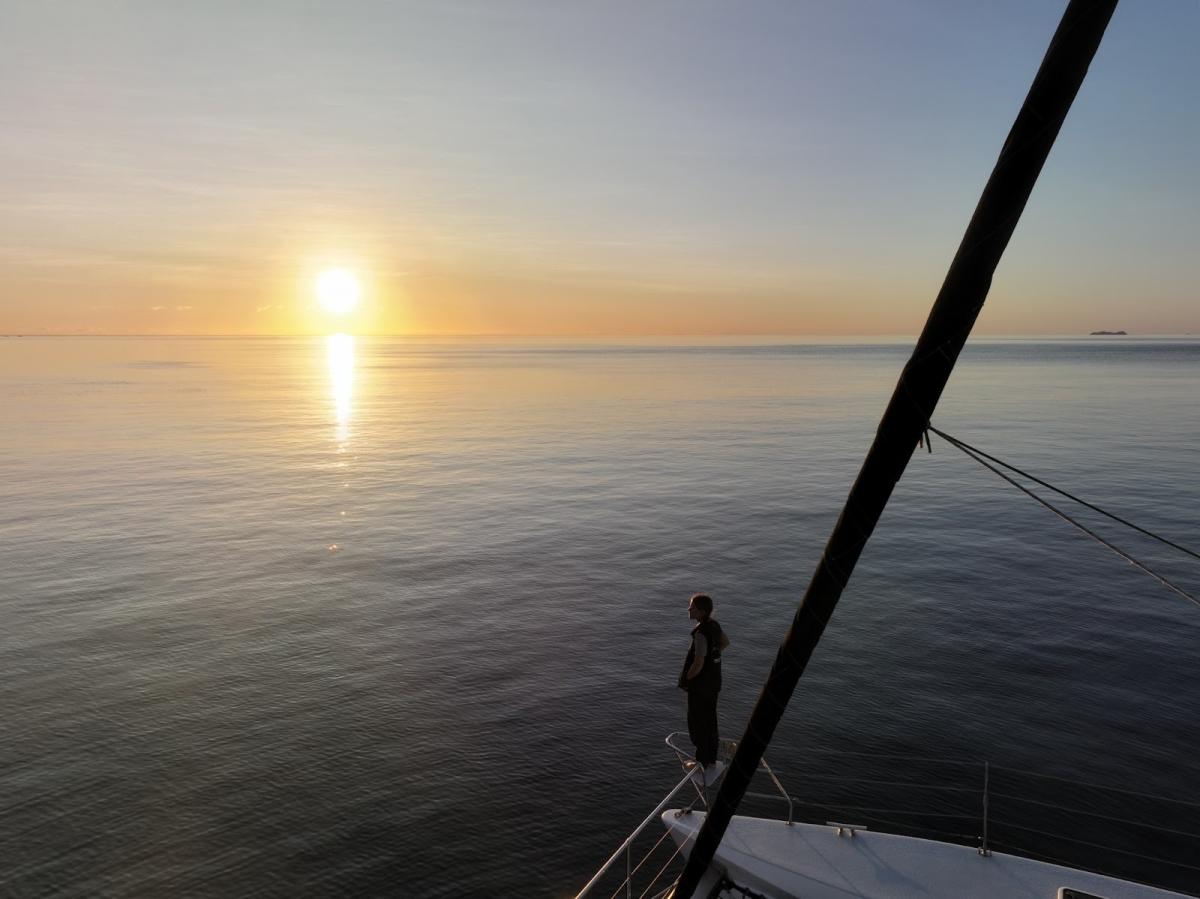
Thinking about a trip to the Whitsundays? The islands have their own rhythm, shaped not just by the seasons but by tides, trade winds, and the passing of whales. Each season brings something different, and the time of year you visit will shape your experience. From the beaches you explore and the waters you dive into, to the energy in the town itself.
Here’s what the year really feels like, and what you can expect in the air, sea, and tides.
Summer
(December – February)
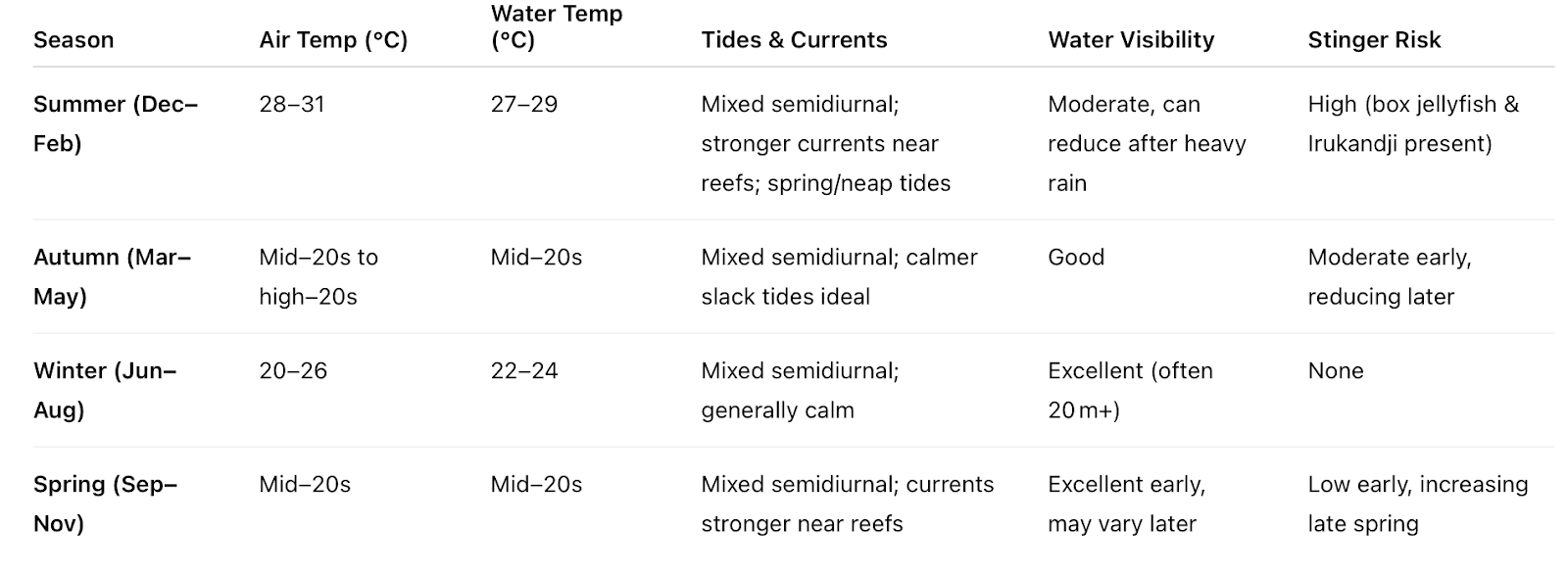
Summer in the Whitsundays is hot, humid, and alive. Air temperatures reach 28 - 31 °C, and
humidity wraps around you like a warm, damp towel. Tropical storms are common, often brief but
intense, clearing quickly to bright blue skies.
Water Temperature & Conditions:
- Sea temperatures are 27 - 29 °C, perfect for swimming and snorkelling.
- Visibility varies depending on rainfall - runoff after heavy rain can make the water slightly murky, but marine life is abundant and active.
- This is stinger season, so protective suits are essential when swimming or snorkelling.
Tides & Currents:
- Tides follow a mixed semidiurnal pattern, with two highs and two lows each day of differing heights.
- Currents can be stronger around reefs and inlets, particularly during spring tides (new and full moons).
- Summer is vibrant - warm water, dynamic weather, and bustling anchorages.
Autumn
(March – May)
Autumn is often considered the sweet spot of the year. Humidity eases, air temperatures hover in
the mid-20s to high-20s °C, and rainfall tapers off. Storms become less frequent, leaving sunny,
golden days.
Water Temperature & Conditions:
- The sea remains mid-20s °C, comfortable for snorkelling, paddleboarding, and kayaking.
- Visibility improves as wet-season runoff settles, often offering clear waters over fringing reefs.
- Stinger risk reduces gradually, though suits may still be needed early in the season.
Tides & Currents:
- Tidal patterns remain consistent, with calmer conditions around slack tide ideal for water activities.
- Autumn offers warm water, calmer seas, and quieter anchorages. A season for gentle exploration and long sunsets.
Winter
(June – August)
Winter brings dry, mild, and clear days, with air temperatures 20 - 26 °C and low humidity.
Mornings can feel cool, but by midday swimming is comfortable.
Water Temperature & Conditions:
- Sea temperatures cool slightly to 22 - 24 °C, still pleasant for swimming.
- Underwater visibility is often at its best, sometimes exceeding 20 m, making it ideal for snorkelling and diving.
- No stingers are present.
Tides & Currents:
- Tides are predictable and generally calm. Slack tide provides the smoothest water for boating and paddle activities.
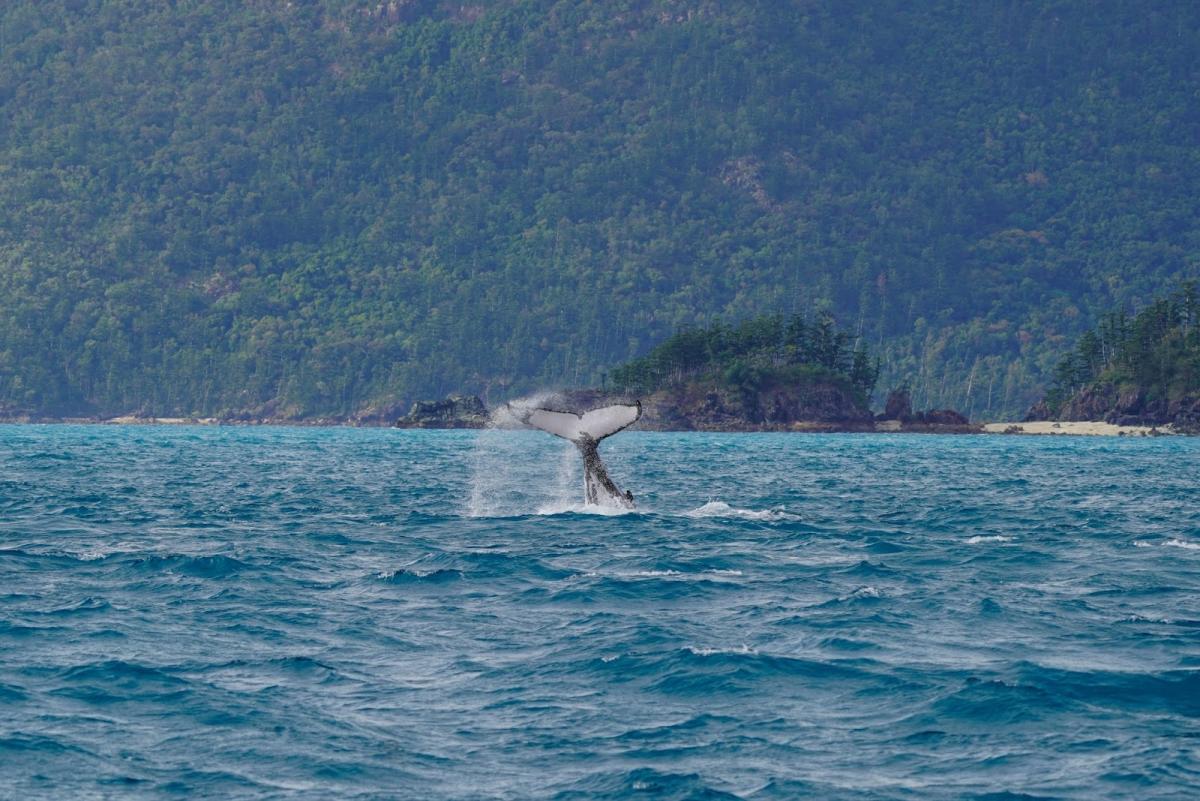
- Winter is peak sailing season, with steady trade winds, deep sapphire seas, clear water and the arrival of migrating humpback whales.
Spring
(September – November)
Spring is transitional, vibrant, and slightly unpredictable. Air temperatures climb back into the
mid 20s °C, humidity returns gradually, and the sea warms.
Water Temperature & Conditions:
- Sea temperatures rise to the mid 20s °C, ideal for water sports.
- Early spring usually offers excellent visibility, especially before rainfall increases later in the season.
- Turtle activity rises, and whales may linger early in the season.
Tides & Currents:
- Tidal patterns remain consistent; currents can be stronger around reefs but are generally manageable.
- Spring feels anticipatory - warm waters, variable winds, and clear seas ready for exploration.
What Stays the Same, Year - Round
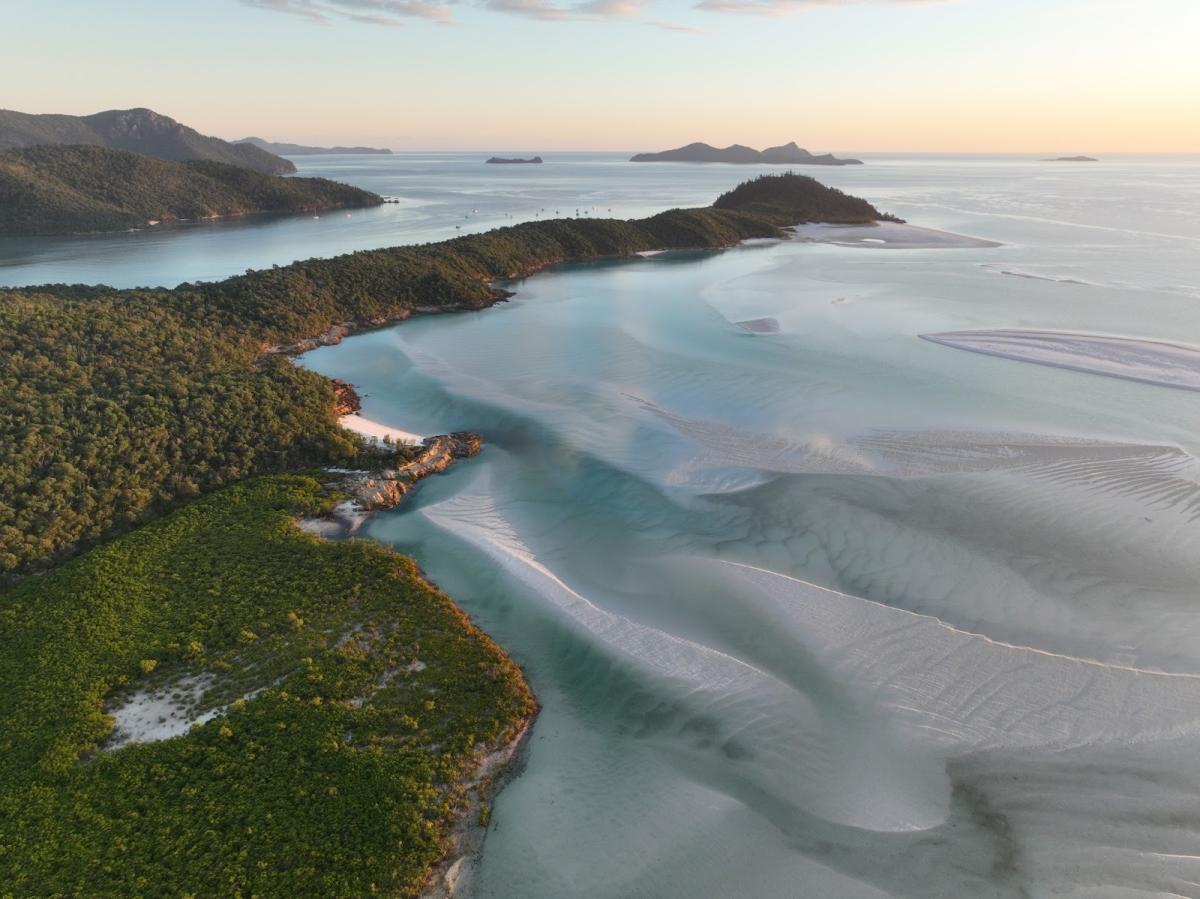
- The 74 islands, rising green from turquoise water.
- The reefs, alive beneath your feet.
- The quiet of a secluded beach, reachable only by boat.
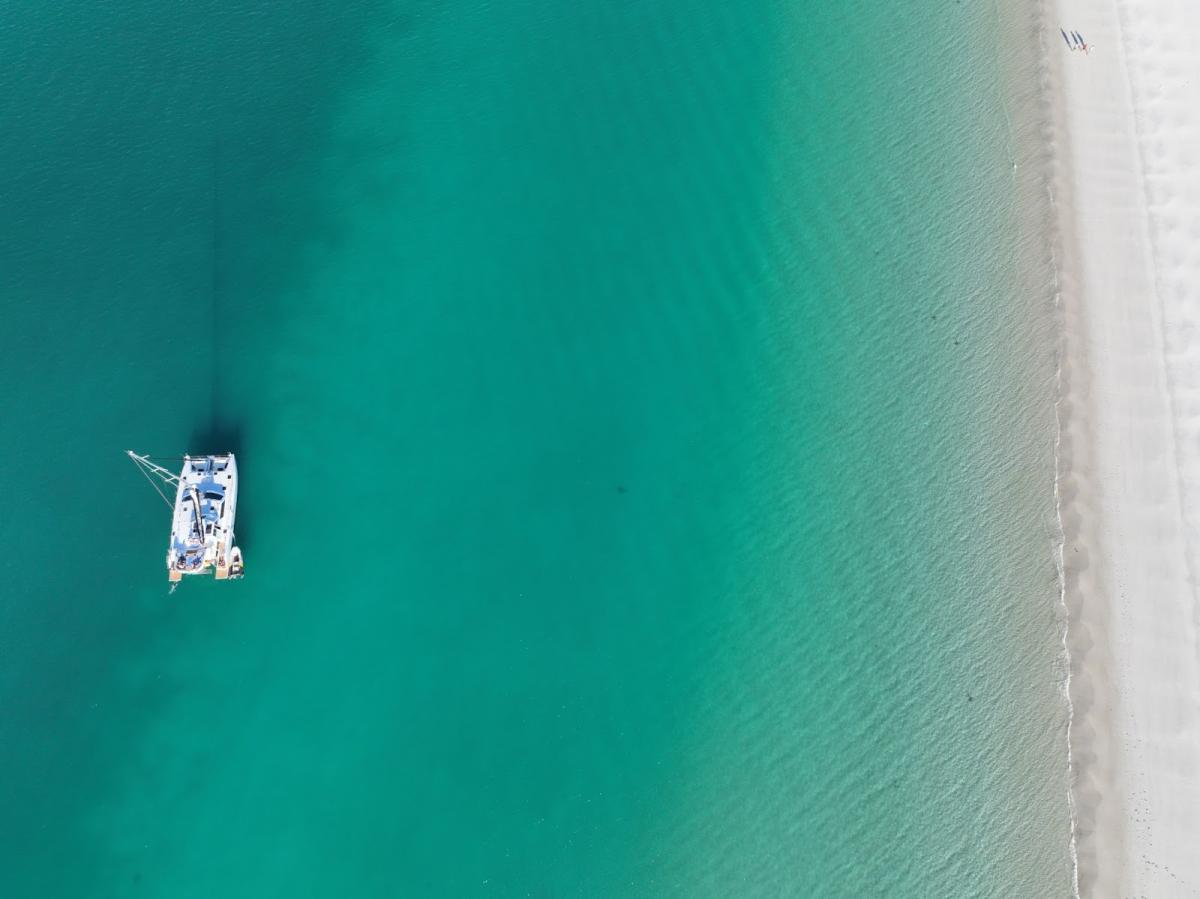
- The feeling of stepping off a sailing catamaran into clear water.
Out here, seasons aren’t just weather patterns. They define your experience of the Whitsundays.
Some come chasing whales in winter. Some come for summer storms. Some for autumn calm or spring’s
anticipation.
The only real question is,
What kind of day do you want to sail into?